CANADA'S INNOVATION LEADERS



Canada's innovation community continues to be at the forefront of research and discovery.

Through entrepreneurship, commercialization and social innovation, researchers in our universities, hospitals, colleges and companies are turning their leading-edge research into products, technologies and services that advance our economy and improve the lives of citizens the world over. Take a look at how their work is transforming society.


Canada has long demonstrated its commitment to building world-class research infrastructure. Strategic investments through the Canada Foundation for Innovation are equipping our universities, colleges, research hospitals and non-profit research institutions with the equipment, platforms and facilities that allow researchers to turn their curiosity into discovery. These investments do more than support labs - they create jobs, enable breakthroughs and generate meaningful economic growth for Canadians.

By strengthening research ecosystems, we unleash innovations that defend our national security and sovereignty, solve Canada's affordable housing crisis, bolster our agricultural sector, transform manufacturing and deliver game-changing energy solutions that drive Canada's clean energy transition. When our researchers have access to cutting-edge infrastructure, they can collaborate globally, translate ideas into market-ready solutions and create solutions to some of Canada's most pressing challenges.

Let us keep building - for the innovators, the entrepreneurs and the Canadians whose lives are enriched by their advances.

Innovation.ca
Minding the Brain: Where Science Meets Conversation

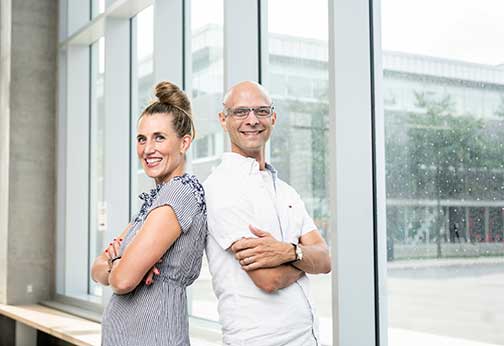
Carleton University's dynamic duo - Neuroscience Professor Kim Hellemans and Cognitive and Computer Science Professor Jim Davies - bring the wonders of the mind to life in their award-winning podcast, Minding the Brain. Recipients of the People's Choice Award for Favourite Canadian Science Site by the Science Writers and Communicators of Canada in 2019, the show dives into the science behind how we think, feel, and behave.

From trauma and pet therapy to morning people versus night owls, Hellemans and Davies explore fascinating topics with humour, warmth, and scientific insight. Their conversational style makes complex research engaging and relatable, whether they're interviewing each other or welcoming guest experts.

With episodes on important topics such as social media and mental health, gender and the brain, schizophrenia, and ADHD Minding the Brain continues to educate and entertain listeners across Canada, bringing evidence-based science straight to your ears, one conversation at a time.

mindingthebrainpodcast.com
At the Cégep de Trois-Rivières, research remains a key element to our institutional achievements and growth.

This year, the Centre de métallurgie du Québec (CMQ) celebrated its 40th anniversary. The CMQ played a key role in the development of more than 220 local and international businesses, all while welcoming between 25 and 50 students each year.

In 2024, the Cégep inaugurated its Bureau de la recherche, de l'innovation et de la qualité (BRIQ), whose mission is to promote research and support teachers in this field.

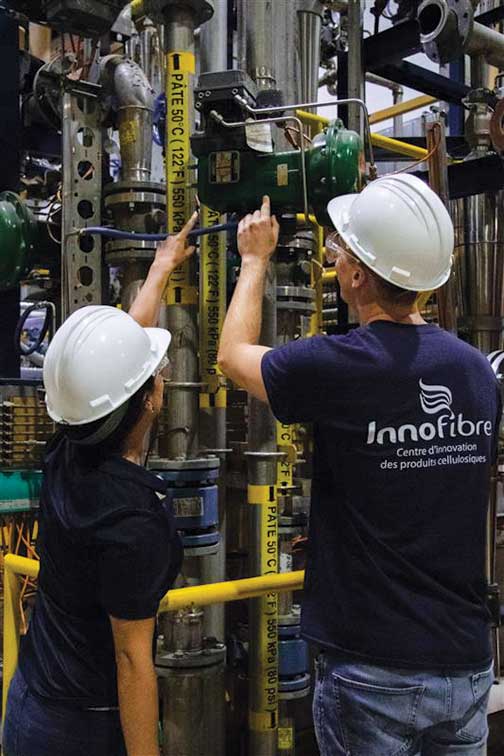
In 2022, the Cégep received $6.05M in funding for the construction of a new research hub for Innofibre who will now be able to develop new bio-based processes and products. The staff will move in by the end of 2025.

In 2018, the C2T3 started researching artificial intelligence to develop learning algorithms and is now a leader in this field with more than 100 projects in progress.

cegeptr.qc.ca
Harnessing the power of artificial intelligence (AI), CHEO researchers developed a world-first search algorithm that identifies children and youth who may have an undiagnosed rare genetic disease and recommends a referral for genetic testing. Called ThinkRare, the search algorithm has moved from research into the clinic and now triggers a clinician-facing alert on the charts of suspected undiagnosed patients - meaning more children, youth and families are receiving answers to their diagnostic journey sooner. To date, ThinkRare has resulted in 17 diagnoses, with a 71% diagnosis rate for kids flagged by the algorithm - some years earlier than through traditional pathways. Now, the ThinkRare team is actively exploring opportunities to expand its reach to other health care centres across Canada and even internationally. ThinkRare exemplifies what is possible when bold ideas are matched with groundbreaking research, collaboration and a commitment to always innovate - all of which is in the DNA of CHEO.

cheoresearch.ca
To help address Canada's productivity crisis, Humber Polytechnic's Centres of Innovation (COI) Network is working hand-in-hand with small and medium-sized enterprises (SMEs) to accelerate technology adoption, streamline operations, and build long-term innovation capacity. Anchored by the Barrett Centre for Technology Innovation, the COI Network brings together five specialized centres, each powered by expert faculty and innovation-ready students.

Through hands-on, collaborative projects, industry partners benefit from Humber's innovation ecosystem, where they explore, test, and transform ideas and problems into real-world solutions. One such collaboration with Mitsubishi Heavy Industries - Regional Jet (MHIRJ) led to the development of a mobile digital platform that streamlines aircraft maintenance by enabling offline access to critical manuals and data. While Industrial and Interaction Design students partnered with LeddarTech to reimagine the car of the future using LeddarVision™ technology, focusing on real-time hazard detection and user-centered design.

From robotics and aerospace to automotive design and creative storytelling, Humber is not only solving today's challenges but also preparing the next generation of innovators to shape a more productive and resilient Canadian economy.

humber.ca/coi-network
Opening in Fall 2026, Lakehead University's Barrie STEM Hub is where innovation meets opportunity. Located in Barrie's waterfront district, the STEM Hub empowers tomorrow's engineers, computer scientists, entrepreneurs, and innovators to shape the future through hands-on, high-impact learning in an intimate, high-tech environment. From building AI models to developing systems and robotics, the Barrie STEM Hub is designed to connect students with real-world opportunities. With Barrie and the surrounding region emerging as a nucleus of innovation, and through Lakehead's strong industry partnerships, students gain access to local tech and advanced manufacturing employers, co-op pathways, and hands-on learning experiences that translate directly to the workplace. The STEM Hub is built around what employers need today - and tomorrow. With undergraduate and graduate program offerings in engineering and computer science, the STEM Hub provides a smaller space focused on what matters most: innovation, mentorship, and real-world experience. Applications are open for 2026 programs.

lakeheadu.ca/about/barrie-stem-hub
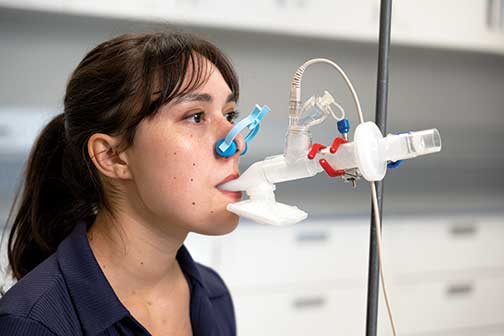
McMaster's inhaled vaccine is administered via a personal inhalation device. It is currently in phase-2 human trials.
Pioneering groundbreaking vaccinology research and innovation

For over 50 years, McMaster University has been at the forefront of vaccinology, making groundbreaking contributions that have shaped the field. Among these contributions are McMaster researcher Frank Graham's

HEK 293 cell line, which created a reliable and efficient way to test new vaccines, and an innovative tuberculosis booster developed by professors Zhou Xing and Fiona Smaill.

These discoveries positioned McMaster at the frontlines of the response to the COVID-19 pandemic. McMaster's inhaled COVID-19 vaccine platform is now the flagship translational research initiative at the university's health innovation accelerator, NexusHealth.

Phase-1 human trials showed promising early results for the new vaccine, which is delivered directly to the lungs via a personal inhalation device. This targeted approach makes it more effective at inducing protective immune responses than traditional needle-based vaccines.

The inhaled vaccine technology has been licensed to AeroImmune Inc., a university spinout company supported by the McMaster Seed Fund, and is currently undergoing phase-2 human trials.

infocus.mcmaster.ca/innovation-health
Artificial intelligence (AI) is transforming how people live, work and learn, and reshaping health care, education, digital security and more. As AI's influence grows, so does the need for leadership that ensures technology advances human well-being and protects the planet.

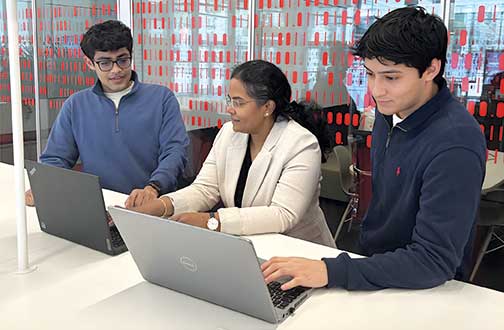
Ontario Tech University is meeting this challenge through the Mindful Artificial Intelligence Research Institute (MAIRI), an interdisciplinary hub that reinforces Ontario Tech's global reputation for thoughtful, intentional, inclusive and human-centred innovation. Bringing together more than 50 researchers from every faculty, MAIRI unites broad-ranging expertise with key partnerships spanning academia, industry and government to explore AI's role in advancing well-being and global flourishing.

MAIRI exemplifies Ontario Tech's tech with a conscience ethos: innovation grounded in purpose and integrity. This approach moves beyond emphasizing rapid technological and economic advancement to consider how AI can make life better for people and communities.

ontariotechu.ca/ai
Over the past year, Seneca's Centre for Innovation in AI Technology (CIAIT) has advanced innovation through projects that reflect the rapid adoption of artificial intelligence (AI) across industries. Leveraging the rise of generative AI (GenAI), CIAIT helped a recruitment agency train a AI model to generate customized job postings and supported a claims management company in developing a GenAI-based tool to streamline operations. Beyond GenAI, CIAIT has applied advanced AI techniques such as predictive analytics for geo-exploration and customer insight, computer vision to automate tasks, and digital twin technologies to reduce waste. Recognizing that AI readiness is critical to adoption, CIAIT is increasingly focused on helping small and medium-sized enterprises overcome barriers such as limited resources, data challenges, and ethical concerns. Through these efforts, CIAIT continues to strengthen business competitiveness, foster responsible innovation, and contribute to regional economic growth by bridging the gap between emerging technologies and practical business applications.

senecapolytechnic.ca/innovation/research/centres/ciait.html
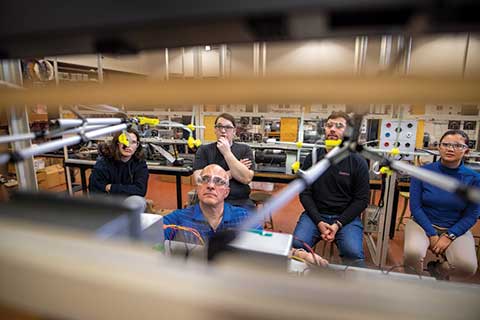
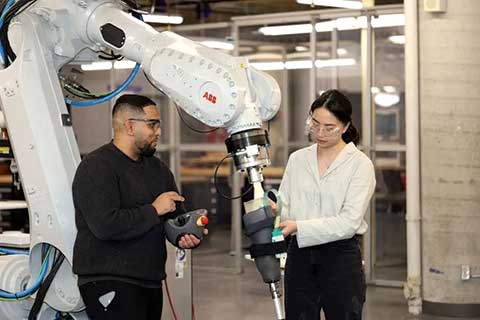
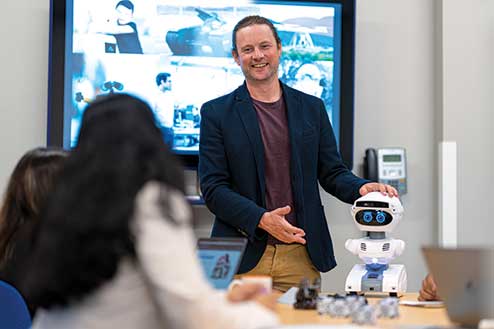
Generator at Sheridan's Centre for Intelligent Manufacturing researchers working on the Robotic Gait Simulator - a state-of-the-art, 6-axis robotic system that mimics human walking - which is revolutionizing prosthetic design by reducing the abandonment rate and giving mobility back to those who need it most.
Generator at Sheridan is where purpose and passion unite, bringing together faculty, staff, students, and partners across disciplines and sectors to drive meaningful impact for an ever-changing world. More than Sheridan College's research and innovation hub, Generator is a catalyst for change, turning applied research into real-world solutions that deliver measurable outcomes across Canada. Our faculty-led researchers and four renowned research and innovation centres help industry, community, and government partners accelerate innovation, improve productivity, and bring new ideas to market. By combining deep expertise with a commitment to solving wicked problems, Generator strengthens Canada's economy, supports communities, and exemplifies how applied research drives meaningful change.

sheridancollege.ca/generator
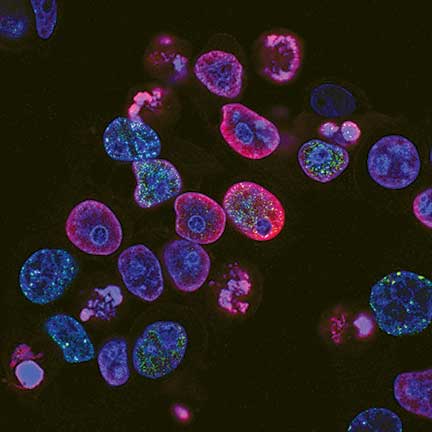
A team of Toronto Metropolitan University (TMU) researchers developed a first-of-its-kind cancer treatment that combines nanomedicine and unfocused ultrasound. The result is a non-invasive, targeted drug delivery system that delivers stronger therapeutic effects than either treatment alone.

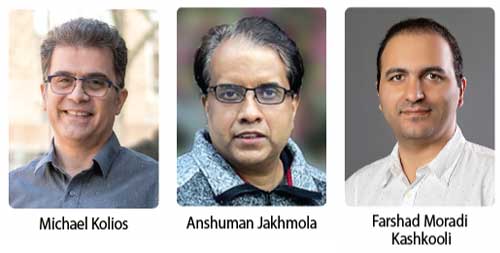
The research originates from the laboratory of TMU physics professor Michael Kolios, conducted by postdoctoral fellows Farshad Moradi Kashkooli and Anshuman Jakhmola. It's supported by a multidisciplinary team at the Institute for Biomedical Engineering, Science and Technology (iBEST), a partnership between TMU and St. Michael's Hospital, Unity Health Toronto.

The team's technology uses low-intensity ultrasound waves to activate drug-coated gold nanoparticles within tissue, directing cancer-fighting drugs to the precise location they are needed most.

After the nanoparticles are injected, ultrasound waves activate them to release their drug payload. The gentle waves help more nanoparticles - each about one ten-thousandth the width of a single human hair - to pass through cell membranes and deliver their medicine directly to tumour sites.

torontomu.ca/research
Ground-breaking research conducted at the CHU de Québec-Université Laval Research Centre is transforming the landscape of Parkinson's disease diagnosis and treatment. Led by Université Laval's Professor Francesca Cicchetti, the team has identified blood biomarkers that could enable faster and more accurate diagnosis. In parallel, their work on the compound cysteamine has shown robust neuroprotective and neurorestorative effects in multiple cell and animal models, underscoring its potential as a disease-modifying therapy. To accelerate the translation of Dr. Cicchetti's pioneering research, the Canadian biotechnology company Synucure Therapeutics was founded in 2021 and is currently pursuing the commercialization of the blood biomarker as a screening test to identify individuals at risk of developing the disease, with a first clinical trial using cysteamine planned for June 2026. By advancing fundamental discoveries into tangible innovation, Université Laval exemplifies the vital role of universities as catalysts for innovation, driving progress in human health and global technology.

ulaval.ca/en/research
Smarter nanomedicine: Tiny particles that treat while they deliver

When treating diseases like cancer or heart conditions, scientists often use nanoparticles - tiny carriers that deliver medicine directly to affected cells. But until now, these particles were just messengers: they delivered the drug and then disappeared. Researchers at the University of Ottawa have changed that. They've developed a new kind of nanoparticle that not only delivers treatment but also helps fight disease itself. These "armed" particles are designed to activate immune cells and trigger healing responses, even when they're not carrying any medicine. This breakthrough means that every particle injected into the body could play a dual role - making treatments more effective and potentially reducing the amount of medication needed. It's a smarter, more efficient way to treat complex diseases, and it could lead to more personalized therapies with fewer side effects. This innovation marks a major step forward in how we design and deliver medicine.

uottawa.ca/research-innovation
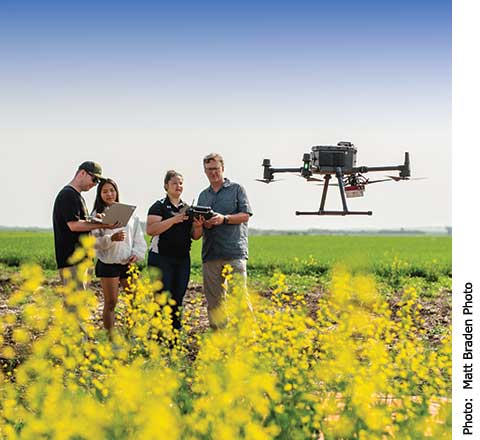
University of Saskatchewan (USask) students Connor Burbridge and Elizabeth Byambatseren, Brianna Zoerb (drone technician) and Dr. Steve Shirtliffe (PhD) work with cutting-edge drone technology.

In the heart of Canada, the University of Saskatchewan (USask) is a world leader in groundbreaking, difference-making research and technology.

USask is home to four of Canada's 19 recipients of the Major Science Initiatives fund for research infrastructure of critical national importance: the Vaccine and Infectious Disease Organization, the Canadian Light Source, the Super Dual Auroral Radar Network, and Global Water Futures Observatories.

Researchers in USask's College of Medicine are developing new virtual reality tools to enhance health science education in Indigenous communities, bridging gaps in access and incorporating traditional cultural knowledge into the curriculum.

And scientists at USask's Crop Development Centre (CDC) have created more than 500 new varieties of over 40 different crops, helping feed people around the world.

USask is a proud hub for world-leading research, scholarly and artistic works, leading transformational advancements now, and into the future.

usask.ca
Top