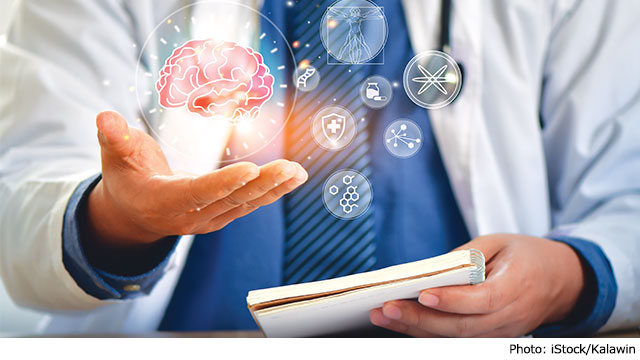
The human brain is one of the most intricate systems in existence - an organ of astonishing complexity that shapes how we think, feel and experience the world. Understanding it demands not only scientific insight but also creativity, collaboration and technological innovation.
At the same time, rapid social and technological change is reshaping the challenges facing brain health researchers. An aging population is driving a rise in dementia and other neurodegenerative diseases, while younger generations face mounting mental health pressures tied to screen time, social isolation and digital overload. Concussions, too, are gaining attention - from sports fields to seniors' homes - as scientists work to develop faster, more accurate ways to detect and treat brain injury.
Across Canada, research institutions are rising to these challenges, uniting experts in neuroscience, psychology, engineering, data science and artificial intelligence (AI) to better understand how the brain works - and how to support it when it doesn't. By embracing interdisciplinary approaches and advanced technologies, Canadian universities, colleges, polytechnics and hospital-based research institutes are developing practical solutions to protect brain health - at every stage of life.
CHEO RESEARCH INSTITUTE
Unlocking the potential of young minds
Brain health research in children and youth is fundamentally different - and arguably more crucial - than for any other age group.
"Children's brains are still developing, with high levels of neuroplasticity. This means interventions can have transformative effects," explains Dr. Jason Berman, CEO and Scientific Director of the CHEO Research Institute, and Vice-President Research of CHEO.
"For example, mental health conditions like eating disorders are particularly prevalent in teenagers, and treatment early on can have significant impact on chronic issues in adulthood. Similarly, when a child's developing brain is injured, it can change how they learn and grow, making early detection so important."
Children’s brains are still developing, with high levels of neuroplasticity. This means interventions can have transformative effects.
Dr. Jason Berman
CEO and Scientific Director, CHEO Research Institute
Vice-President Research, CHEO
At the CHEO Research Institute, the Mind Matters team brings together experts in concussion, mental health, autism, neurological conditions, brain tumours and more. "We work across disciplines to solve complex problems," says Dr. Berman. "Psychiatrists, psychologists, radiologists, neurologists, social workers, pediatricians and neurosurgeons collaborate closely, combining their expertise to drive innovation and improve care."
Two areas where they are leading the way are concussion research and precision mental health. The CHEO Research Institute is already a global leader in pediatric concussion care, shaping international best practices for returning to school, sports and daily life after injury. The TRANSCENDENT initiative is building on this legacy by creating one of the world's largest concussion datasets to address critical gaps in research and care.
The Precision Child and Youth Mental Health Collaboratory is also using data and technology to personalize mental health care. For example, they are researching the integration of AI with electronic medical records to identify children at risk of repeated ER visits for depression, so they can get targeted, tailored support early on.
"We know as many as 50% of children and youth do not respond to the current one-size-fits-all approach to mental health treatment," Dr. Berman notes. "Instead, we're looking at how to use detailed information about young patients - from their DNA code to their postal code - to more precisely identify and treat their mental health problems."
But for Dr. Berman, pediatric brain health research is not just about treating illness, it's about unlocking potential. "Our goal is to detect disorders sooner and provide better interventions to children and youth - so they can thrive throughout their lives."
BAYCREST
Integrating science, commercialization and care
Baycrest is among the few organizations worldwide that brings together research, clinical care, residential living, education and innovation - all in one place and all dedicated to brain health and aging.
It’s incredibly fulfilling to know that the research, education and innovation we lead changes people’s lives, preserving their independence, dignity and well-being as they age.
Dr. Allison Sekuler
President & Chief Scientist
Baycrest Academy for Research and Education | Centre for Aging + Brain Health Innovation
"This bench-to-bedside-to-community model creates a real living lab, enabling us to rapidly translate scientific discoveries into real-world solutions that improve lives," says Dr. Allison Sekuler, President & Chief Scientist of the Baycrest Academy for Research and Education (BARE), President & Chief Scientist of the Centre for Aging + Brain Health Innovation (CABHI), powered by Baycrest, and the Sandra A. Rotman Chair in Cognitive Neuroscience, Rotman Research Institute and University of Toronto.
BARE conducts research on the aging brain, memory and cognitive health, and provides advanced training for healthcare professionals, researchers and students. For example, BARE is presently conducting research on digital biomarkers for the early detection of cognitive decline.
As an innovation catalyst, CABHI complements the work of BARE, ensuring its breakthroughs - and those from around the world - are developed, tested, spread and scaled. For example, its Discovery + Adopt program helps healthcare and community-based organizations adopt innovations that can improve the quality of life for older adults.
CABHI also helps innovators such as RetiSpec, which uses AI-driven retinal imaging for early detection of Alzheimer's, and GeriMedRisk, a telemedicine service for clinicians, commercialize in Canada. "Our support of companies like these creates jobs here at home, and helps our seniors get accurate diagnoses and treatments faster than ever before," Dr. Sekuler explains.
Along with BARE and CABHI, Baycrest also hosts the Kimel Family Centre for Brain Health & Wellness, the world's first research-based community centre dedicated to reducing dementia risk through personalized brain health programming for people aged 50+.
According to Dr. Sekuler, this comprehensive approach to brain health research and innovation is an essential investment for our country. "Healthy brains are as important as bricks and bridges in building Canada's future - a powerful driver of social and economic resilience for our rapidly aging world," she says.
Sekuler's background in cognitive neuroscience, computational science and the arts ensures Baycrest stays ahead of the curve, while remaining deeply human-centred. "It's incredibly fulfilling to know that the research, education and innovation we lead changes people's lives, preserving their independence, dignity and well-being as they age."
WATERLOO UNIVERSITY
Tackling concussion screening
Andrew Cordssen-David, CEO and Co-founder of HeadFirst Inc., is clear about how his idea to develop an easier, more accurate tool to screen for concussions first struck. "I was in Waterloo University's Master of Business, Entrepreneurship and Technology (MBET) program, where we had a one-year sprint to validate a business concept."
The former junior hockey player, who had his own share of hits to the head, then connected with biomedical nanotech scientist, Dr. Shazia Tanvir. With the help of the university's Velocity Incubator, the two began developing a rapid, non-invasive saliva test for concussions.
One of the biggest challenges they faced was dealing with human saliva, which is viscous, full of bacteria, and often contaminated by traces of food or drink. As Dr. Tanvir puts it, "Without overcoming those interferences, we could not sense the concussion biomarkers," a challenge the team says they've now largely solved.
They are now completing a major pilot study involving hundreds of athletes, screening for a wide range of biomarkers. "These are the biological indicators released into the body after mild traumatic brain injury," says Dr. Tanvir. Early results are promising, with one biomarker already used in Europe for concussion management showing particular potential.
While there are already blood-based lab tests for concussion, the pair says no objective test is currently available that can be used reliably at the point of care. And subjective symptom checklists just aren't good enough. "Most people who suffer concussions understate their symptoms," Dr. Tanvir explains.
HeadFirst has already built a prototype that works like a COVID-19 test kit, with one line negative and two lines positive. It is easy to interpret, and results can be read by anyone. The company is engaging with both the FDA and Health Canada, and global sports organizations have already reached out, a sign the demand is real.
Looking ahead, the company's goal is ambitious - to launch before the end of 2028. "The need is clearly there." Cordssen-David says. "In the next five years, we want to be on the sidelines of every sporting event, and in the hands of paramedics and doctors, to finally remove the guesswork from concussion screening."
UNIVERSITÉ LAVAL
Shedding light on brain science
Ask Professor Yves De Koninck what sets Université Laval's CERVO Brain Research Centre apart, and he won't hesitate - it's their transdisciplinary approach.
"To understand the complexity of the brain and brain health, you have to bring together various disciplines and foster a fertile dialogue between them," the centre's director explains.
To understand the complexity of the brain and brain health, you have to bring together various disciplines and foster a fertile dialogue between them.
Professor Yves De Koninck
Director, CERVO Brain Research Centre, Université Laval
Hosted in the Centre intégré universitaire de santé et de services sociaux (CIUSSS) de la Capitale-Nationale, CERVO is among the world leaders in interdisciplinary innovation in brain research. The pioneering research hub combines tools of physics, engineering and optics-photonics with biological, psychiatric and clinical approaches.
"We have many physicists, chemists, engineers and mathematicians working with us at CERVO, and many of our physicians even hold advanced degrees in physics or engineering," adds Professor De Koninck.
This cross-pollination is especially evident in CERVO's 20-year partnership with the university's Centre for Optics, Photonics and Lasers (COPL). The joint neurophotonics initiative is developing advanced light-based technologies to probe brain circuitry, aid diagnostics and photo-therapy of brain disorders, and train the next generation of scientists.
This distinct model of collaboration has attracted top international talent, including three Canada Excellence Research Chairs. "One scientist is developing next-generation fibre optics for biomedical applications, while another is working on early biomarkers for psychiatric diseases," says Professor De Koninck. "A third is exploring neuroplasticity - specifically, how lifestyle improvements and stress reduction can reshape our brains, and how this can be harnessed for therapeutics."
The initiative's success helped inspire Sentinel North, Université Laval's $100-million interdisciplinary research strategy aimed at improving our understanding of the northern environment and its impact on humans and their health. It has also had a major impact on helping diversify the region's tech industry into the biomedical sector.
Meanwhile, CERVO boasts the fastest growth of a neuroscience and mental health research centre in Canada over the last 15 years. And its discoveries are helping to reshape medicine. For example, its researchers have identified sex differences in major depression, and are developing new gene- and light-based therapies for Parkinson's, ALS and chronic pain.
For Professor De Koninck, the future lies in nurturing scientists who can think across boundaries. "Tomorrow's neuro-technologies must adapt to the brain's ability to continuously remodel itself," he says. "At Université Laval we're training a generation ready to embrace that complexity."
LAKEHEAD UNIVERSITY
Responding to real-world problems
Lakehead University's three locations - Thunder Bay, Orillia and Barrie - sit in some of Ontario's most striking landscapes. But for Dr. Langis Roy, newly appointed Vice-President of Research and Innovation, it is more than the setting that stands out. It's how Lakehead channels its regional strengths into research that makes a difference.
"Lakehead is deeply committed to serving the communities in which it's present. The result is research that's locally grounded, yet globally impactful," he explains.
Nowhere is this more evident than in the research of Dr. Sonia Mastrangelo, Assistant Dean and Professor in the Faculty of Education. Her work on self-regulation and youth provides Lakehead students with practical ways to reduce stressors and improve their well-being.
"The problem statement was right in front of our eyes," says Dr. Roy. "Our own students are seeking mental health support, and the need is ever-growing - here and around the world."
With mental health one of the pillars of Lakehead's brain health research, a national initiative focused on Indigenous youth was recently launched, co-led by Dr. Christopher Mushquash, Canada Research Chair in Indigenous Mental Health and Addiction. The project aims to strengthen the capacity of Indigenous communities and integrated youth services to deliver culturally grounded mental health supports - with and for Indigenous youth.
"Indigenous culture is woven into everything we do, helping us build strong, respectful partnerships," Dr. Roy notes. "Even our signage in the hallways is in English and Anishinaabemowin."
Another focus of Lakehead's brain health research is cognitive function and well-being across the lifespan. One of the practical challenges it addresses is figuring out when older people should no longer be behind the wheel.
Dr. Michel Bédard, Professor and Director of the Centre for Research on Safe Driving, has developed a protocol that screens drivers - first through cognitive tests and then a customized driving simulator test - before doing any on-road exams. The approach is relatively quick and inexpensive, and is being evaluated in clinical settings in the Niagara region.
"It's in Lakehead's DNA to solve real-world problems in a can-do, creative, collaborative spirit," adds Dr. Roy. "All of this is exciting for me, and I just want to amplify our value proposition to the northern, rural and Indigenous communities we serve."
CARLETON UNIVERSITY
Developing an early Alzheimer's and Parkinson's test
Alzheimer's and Parkinson's are both neurodegenerative disorders, but they affect the brain in different ways. Alzheimer's erodes memory and cognitive brain function, while Parkinson's disrupts movement with tremors and stiffness. Both, however, worsen over time and can have devastating impacts on individuals and families.
The two also share challenges when it comes to identifying the disease. In both cases, patients need to show significant decline before receiving a clear diagnosis, and invasive tests like spinal taps can delay or deter testing altogether.
Ravi Prakash, Director of the Organic Sensors and Devices Lab (OSDL) at Carleton University, and Associate Professor in the Department of Electronics, is working to change this.
He and his team are developing a simple tool that works with a patient's saliva or the prick of their finger. The palm-sized device uses a compact electronic circuit system and disposable biosensor to detect early-stage Alzheimer's or Parkinson's - right in a doctor's office, without long waits or invasive lab tests.
"So far, we've tested the device for the specific proteins associated with Alzheimer's and Parkinson's, as well as the inflammatory markers that further aggravate these diseases," Prakash explains. "We're now in the midst of a clinical trial at the Royal Ottawa Mental Health Centre, seeing how the sensor performs with saliva samples of 40 study participants, comparing Alzheimer's patients with healthy adults.
"In 2026, we plan to launch another clinical study, this time with the Bruyère Health Memory Clinic, to see how well our platform can detect Alzheimer's biomarkers using low volumes of both saliva and finger-prick blood," he adds. "Our hope is to have regulatory approval by 2028, and explore commercialization options to have the tool on the market by 2030."
Close to 750,000 Canadians live with Alzheimer's and 110,00 with Parkinson's. The economic burden is in the billions for Canada alone - and will continue to grow with our aging population.
"The impact of Alzheimer's and Parkinson's ripples far beyond the individual, driving up hospital bills, long-term care costs, unpaid caregiving and lost productivity," notes Prakash. "Our goal is to detect neurodegenerative diseases early, so people can start treatment or lifestyle changes sooner, potentially reversing or stabilizing these diseases."
SHERIDAN COLLEGE
Bridging AI and the aging brain
Two powerful trends are reshaping Canada - our aging population and the rapid rise of AI. At Sheridan College, these forces converge as researchers harness AI and advanced technologies to support the aging brain.
"As people live longer, understanding how to maintain cognitive health and independence becomes increasingly important - not just for individuals, but for families, communities and health systems as a whole," explains Dr. Lia Tsotsos, Director of Research and Innovation.
"At Sheridan, we're looking at how advanced technology - along with things like social engagement, creativity and lifelong learning - can support cognition in aging populations," she adds. "We do this by working closely with older adults and the people who care for them, so our work is grounded in real-world experiences. Our goal is to translate our lab-based and field-tested work into tangible tools that can have a real impact on our communities and our country."
For example, Sheridan's Centre for Elder Research (CER), in partnership with the Ontario Brain Institute, is looking at how a digital conversational agent - enhanced by AI-driven speech analysis - can monitor cognitive function, anxiety and depression in older adults. "Participants showed strong engagement and curiosity," notes Dr. Tsotsos. "This kind of research shows how AI can support aging in place, as long as it complements, not replaces, human interaction."
Meanwhile, Sheridan's Screen Industries Research and Training (SIRT) Centre is exploring how AI-driven immersive technology can improve brain health. In partnership with Toronto-based neurotech company Interaxon Inc., they have developed prototypes that use brain-sensing technology to promote relaxation and mental well-being. One of them - Interaxon's Muse headband - creates meditation experiences using real-time interactive environments that respond to the participant's brainwave activity.
"What's especially exciting is how SIRT's work connects with our Centre for Elder Research," says Dr. Tsotsos. "Together, they've been exploring the use of virtual human companions to support individuals living with dementia. By linking SIRT's expertise in digital innovation with CER's deep understanding of aging, we're shaping the next generation of personalized, data-driven, digital health tools designed to enhance quality of life at every stage of aging."
SASKATCHEWAN POLYTECHNIC
Empowering Indigenous youth through VR
While working as a paramedic in central Saskatchewan, Lindsey Boechler saw firsthand the barriers Indigenous youth face in accessing mental health care.
"I witnessed young people experiencing crises that could have been prevented with the right kind of support," she notes. "That drove my shift from emergency response to finding proactive ways of building resilience and wellness. I wanted to see if immersive technology could help."
Today, Boechler is Research Manager at Sask Polytech's Centre for Health Research, Innovation and Scholarship (CHRIS), where she leads the Virtual Interventions and Community Connections for Indigenous Youth (VICCIY) project.
"VR removes barriers of distance, allowing Indigenous youth in rural and remote areas to come together for wellness and cultural teachings that might otherwise be out of reach," explains Boechler. "VR also makes young people feel safer exploring their mental health, cultural identity and connection with others."
Since launching in 2021, VICCIY has reached more than 150 youth from over 20 Indigenous communities across Saskatchewan. The program's impact has been tangible - participants report reduced depression, anxiety and stress, with 97% rating their experience as good to excellent.
This past spring, VICCIY hosted its second Provincial Youth Wellness Summit, bringing together more than 60 Indigenous youth from 11 rural and remote Saskatchewan communities. Guided by the voices of youth and Elders, the summit blended traditional practices with VR. For example, participants could sign up for workshops on everything from beading and Indigenous fashion to mood management and identifying one's superpowers.
The next phase of the VICCIY initiative began in late November 2025, linking six schools through live, interactive VR sessions every two weeks. Unlike before, these sessions happen in real time, allowing youth to engage directly with Elders, role models and peers in shared virtual spaces for cultural teachings and wellness workshops.
"Everything we do is carried out in collaboration with community partners and co-created with Indigenous youth," adds Boechler. "We look forward to releasing our findings in fall 2026, which will help guide the progression of VR-based supports for Saskatchewan's Indigenous youth."
Leah Geller is a science writer specializing in health, climate, research and innovation.